
Common Reasons Why an Incinerator Burner Fails to Ignite & Quick Fault Diagnosis Tips
As the core component of an incineration system, an incinerator burner that fails to ignite will directly cause the equipment to stop operating normally, affecting industrial production and environmental treatment efficiency. In actual operation and maintenance, burner ignition failure is rarely caused by a single fault. Instead, it is usually a comprehensive manifestation of problems in multiple links such as the control system, ignition system, fuel system, and air supply system.
Based on practical operation and maintenance experience, this article summarizes six core reasons why an incinerator burner fails to ignite and provides systematic and scientific troubleshooting recommendations to help maintenance personnel quickly locate faults and solve problems efficiently.
I. Control and Safety Interlock System Issues: The Primary Cause of No Ignition Action
If the burner has no ignition action at all, the control and safety interlock system should be checked first. This system performs a comprehensive self-check before ignition. If any condition is not met, the ignition program will be directly interrupted. This is a safety protection mechanism of the equipment and also the most common source of problems.
Pre-Purge Not Meeting Requirements
To remove flammable gases accumulated in the furnace chamber and flue, the blower must complete the purge according to the set parameters before ignition. If the purge time is insufficient or the air volume does not reach the standard value, the ignition program will automatically terminate.
Safety Interlock Not Reset
This includes multiple situations:
- Controller failure or manual lockout will directly block the ignition command
- The alarm signal from the previous flame failure is not manually reset, and the system remains in a safety lock state
- Main fuel or ignition fuel pressure being too high or too low will trigger pressure interlock. Low pressure cannot form a flame, while excessively high pressure carries a flame-off risk
- Blower failure or damper sticking causing abnormal combustion air pressure/flow will also trigger interlock
- Pneumatic valves and actuators rely on instrument air supply; insufficient air pressure will prevent valves from operating normally and affect ignition
- In addition, other interlock conditions such as emergency stop button activation, excessive furnace pressure, or exhaust gas inlet temperature not meeting standards will all prevent the ignition program from starting

II. Ignition System Failure: Core Issue When There Is Ignition Action but No Flame
If the humming sound of the ignition transformer can be heard, it indicates that the ignition program has started. However, if ignition still fails, the problem is most likely within the ignition components themselves, which is a direct fault of the ignition system.
Ignition Transformer Failure
The transformer failing to generate high voltage or having insufficient output voltage is the most common ignition component failure. The working condition of the transformer can be quickly judged by checking whether a strong arc is produced with a discharge rod.
Ignition Electrode Abnormalities
- Improper electrode gap, whether too far or too close to the ground wire (burner head) or between electrodes, will affect arc generation
- The electrode tip not aligned with the optimal position of the ignition fuel spray prevents the spark from contacting the fuel
- After long-term operation, electrodes are easily covered by carbon black and fuel coke deposits, reducing insulation performance and causing leakage or failure to produce sparks
- Cracked ceramic insulators can cause high-voltage short circuits to ground, resulting in significant energy loss and direct ignition failure
III. Fuel System Problems: The Most Common Cause of Ignition Failure
Fuel system faults are one of the primary reasons why an incinerator burner fails to ignite. These issues involve both ignition fuel and main fuel. Any problem in either link will affect flame formation and stability.
(1) Ignition Fuel-Related Faults
Ignition fuel is the foundation for starting the flame. Any abnormality in its supply, quality, or delivery will directly lead to ignition failure:
- Empty ignition fuel tank, unopened pipeline valves, or pipeline blockage causing fuel supply interruption
- Fuel pressure too low resulting in insufficient spray volume, or too high causing poor atomization, both of which prevent formation of a combustible fuel-air mixture
- Fuel quality issues such as excessive water or impurities in diesel, or excessive condensate in gas fuel, reducing fuel combustibility
- Solenoid valves on the ignition fuel pipeline not opening or internal leakage affecting normal fuel delivery
- Ignition gun nozzle clogged by impurities, preventing proper fuel spray and making ignition impossible
(2) Main Fuel-Related Faults
These problems apply to systems that directly ignite the main flame or situations where ignition succeeds but the main flame cannot be established:
- Insufficient atomizing medium (steam or compressed air) pressure leading to overly large waste liquid droplets that are difficult to ignite and burn out
- Worn or clogged atomizing nozzles directly affecting atomization performance and reducing fuel-air mixing efficiency
- Sudden changes in the properties of waste materials (waste liquid, waste gas), such as sharp drops in calorific value, high moisture content, or unstable composition, preventing sustained combustion
- Changes in waste gas composition, including too low combustible component concentration or insufficient oxygen content, eliminating the basis for combustion
- Blocked fuel pipeline filters causing insufficient main fuel supply and inability to form a stable flame

IV. Combustion Air System Issues: Improper Air Volume and Distribution Leading to Flame Instability
Combustion air provides oxygen for combustion. Its volume and distribution directly affect flame formation and stability. Even if ignition is successful, abnormalities in the air system can cause the flame to extinguish instantly.
Excessive Air Volume
The air volume required during the ignition stage is much lower than during normal operation. If the furnace airflow is too fast during ignition, it can directly blow out the newly ignited small flame, known as the “blow-off” phenomenon, which is a common air system issue during ignition.
Insufficient Air Volume
Insufficient combustion air leads to a lack of oxygen in the furnace chamber, making it impossible to support the combustion reaction. Even if the spark contacts the fuel, a stable flame cannot be formed.
Improper Air Distribution
Improper adjustment of the burner damper opening results in inadequate mixing of fuel and air. The formed mixture cannot meet combustion conditions, leading to ignition failure or flame extinction.
V. Furnace Operating Conditions: Poor Furnace Environment Affecting Ignition Performance
The operating condition of the incinerator furnace is the external foundation for combustion. Cold furnace startup, abnormal pressure, and slag accumulation will all alter the combustion environment and lead to ignition failure.
Low Furnace Temperature
Especially during cold startup, the furnace temperature is extremely low. After fuel injection, heat is required to warm both the fuel and the furnace environment. If the heat released by the furnace is insufficient to sustain the combustion reaction, the flame will quickly extinguish.
Improper Furnace Negative Pressure
Excessive negative pressure draws in a large amount of cold air, lowering the overall furnace temperature and increasing internal airflow velocity, which easily blows out the flame. Insufficient negative pressure leads to poor flue gas discharge, affecting the mixing of fuel and fresh air.
Slag Accumulation or Refractory Material Falling Inside the Furnace
After long-term operation, slag accumulation and refractory material spalling are common. These issues alter the internal airflow field, resulting in uneven fuel-air mixing and interference with flame formation position, thereby affecting ignition performance and flame stability.
VI. Flame Detection System Misjudgment: A Hidden and Often Overlooked Cause of Ignition Failure
The flame detection system feeds back flame status to the control system. Misjudgment of this system is a hidden fault that is easily overlooked by maintenance personnel but is a common cause of burner ignition failure.
- Damage to flame detectors (commonly UV ultraviolet sensors or ionization electrodes) results in complete loss of flame detection capability, and the system cannot identify whether a flame has formed
- Detector lenses covered by smoke and impurities block ultraviolet signals emitted by the flame, causing signal interruption
- Improper installation position, not aligned with the flame root or brightest area, prevents effective flame detection
- The “false flame viewing” phenomenon, where the detector receives signals from adjacent burners or other high-temperature light sources, generates false flame detection results, causing the system to mistakenly assume the burner is already ignited and refuse to start the ignition program
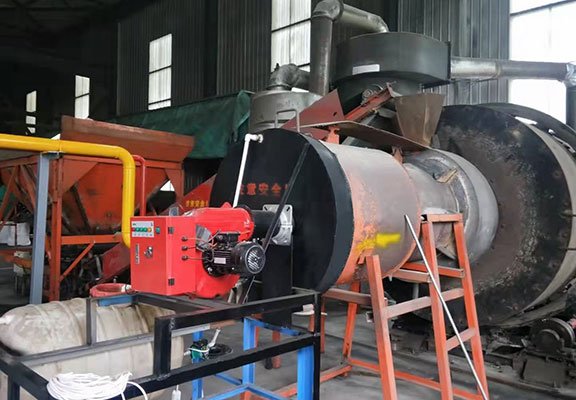
Systematic Troubleshooting Recommendations for Incinerator Burner Ignition Failure
When troubleshooting burner ignition faults, blind operation should be strictly avoided. The inspection must follow the principle of progressing from simple to complex and in a fixed sequence, while strictly observing safety regulations to ensure both efficiency and operational safety.
1. Observe the Fault Phenomenon First
Focus on the alarm information on the control panel to determine the type of ignition fault — whether there is no ignition action at all or the flame ignites and then extinguishes instantly. This information can quickly narrow down the troubleshooting scope and guide targeted inspection of the corresponding system.
2. Troubleshoot According to a Fixed Process
Follow the sequence strictly:
Control and Safety Interlock System → Ignition System → Fuel System → Combustion Air System → Furnace Operating Conditions → Flame Detection System.
Resolve simple and easily detectable faults first, then handle complex and hidden problems to avoid repeated operations.
3. Strictly Follow Safety Operating Procedures
All maintenance and troubleshooting work must be carried out only after equipment shutdown, power disconnection, pressure release, and completion of safety isolation. It is strictly prohibited to dismantle or inspect ignition components, fuel pipelines, or other parts while the equipment is in operation.
4. Compare Key Operating Data
Check historical trends of key parameters such as fuel pressure, air pressure, and air volume during ignition. Compare fault-time data with standard data from normal ignition conditions to quickly locate fault points. Meanwhile, maintain detailed records of fault diagnosis and corrective actions to provide references for future operation and maintenance.